
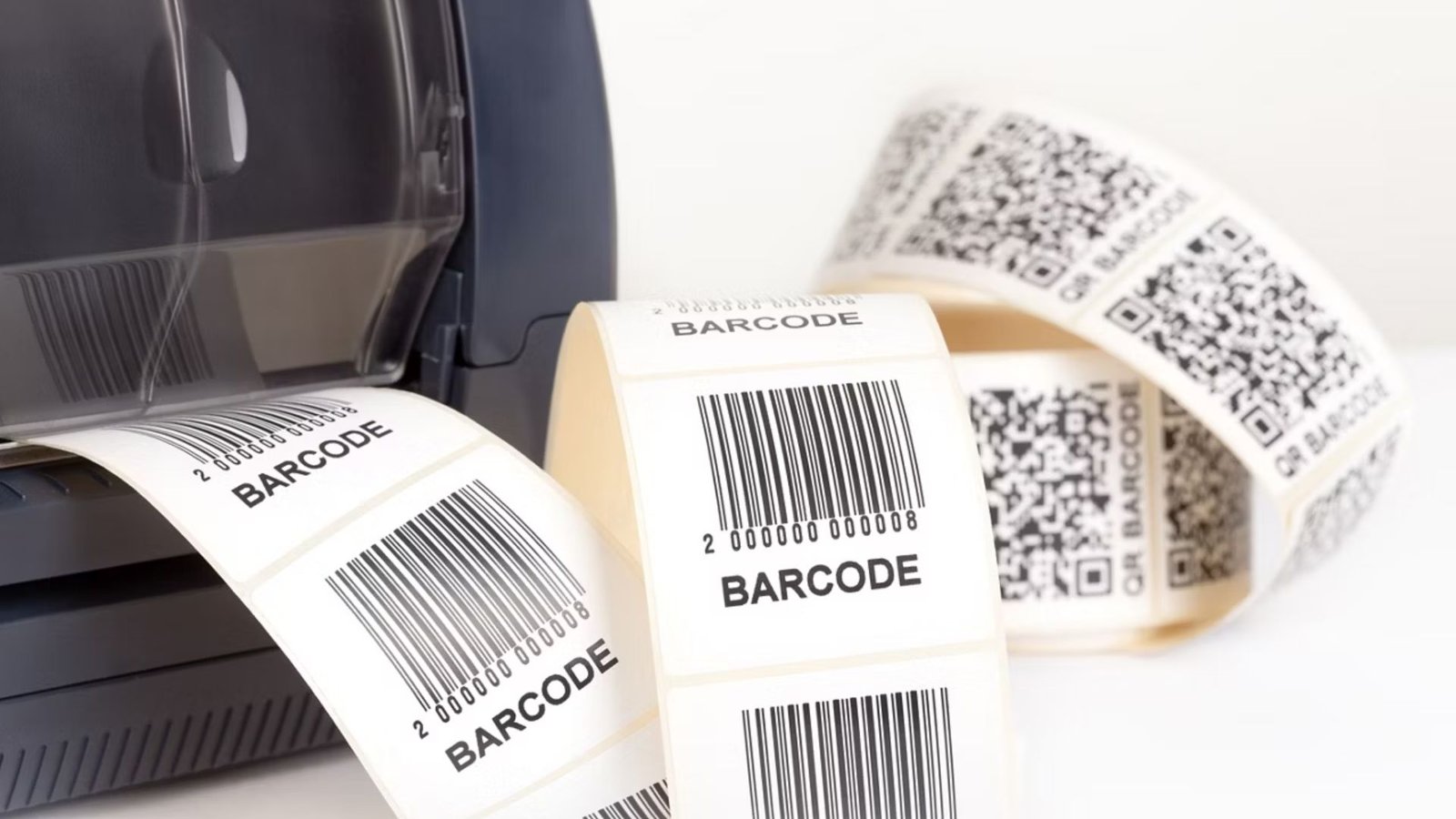
Designing Durable Barcode Labels for Harsh, High-Temperature EnvironmentsIn many industrial settings, barcode labels are exposed to extreme conditions that can quickly compromise their performance. High temperatures, chemicals, abrasion, moisture, UV exposure, and harsh handling can cause barcode labels to fade, peel, crack, or become unreadable.
When barcode labels fail, businesses risk inventory inaccuracies, production delays, compliance issues, and supply chain disruptions. This is why selecting and designing durable barcode labels is critical for industries such as manufacturing, automotive, aerospace, steel processing, chemical production, electronics, logistics, and warehousing.
This guide explores the key considerations for designing barcode labels that can withstand harsh, high-temperature environments while maintaining long-term readability and scanning performance.
Why Durability Matters in Barcode Labeling
Barcode labels serve as the foundation of modern tracking and identification systems. Whether monitoring raw materials, work-in-progress items, finished products, or shipping containers, businesses depend on accurate barcode data.
In demanding industrial environments, standard barcode labels often fail due to:
- Heat exposure
- Chemical contact
- Moisture and humidity
- Abrasion and friction
- UV radiation
- Outdoor weather conditions
When barcode labels become unreadable, businesses may experience:
- Production downtime
- Inventory discrepancies
- Traceability issues
- Increased labor costs
- Customer dissatisfaction
- Regulatory compliance risks
Investing in durable barcode labels helps ensure operational continuity and long-term reliability.
Understanding High-Temperature Challenges
Heat is one of the most destructive factors affecting barcode labels.
Many industrial applications involve temperatures that exceed the capabilities of standard paper labels and conventional adhesives.
Common High-Temperature Applications
- Metal fabrication
- Automotive manufacturing
- Powder coating processes
- Electronics assembly
- Chemical processing plants
- Industrial ovens
- Steel production
- Engine component tracking
Without proper materials and construction, barcode labels can quickly deteriorate in these environments.
Choosing the Right Label Material
The foundation of any durable barcode label is the face material.
Different materials offer varying levels of resistance to heat, chemicals, and abrasion.
Polyester Labels
Polyester is one of the most widely used materials for industrial barcode labels.
Benefits include:
- Excellent durability
- High-temperature resistance
- Chemical resistance
- Tear resistance
- Long service life
Polyester labels are commonly used for asset tracking, equipment identification, and product labeling.
Polyimide Labels
Polyimide labels are designed specifically for extreme heat applications.
Benefits include:
- Exceptional thermal stability
- Resistance to soldering temperatures
- Ideal for electronics manufacturing
- Excellent barcode retention
These labels are often used in PCB and electronics production environments.
Polypropylene Labels
Polypropylene offers a balance between durability and cost-effectiveness.
Benefits include:
- Moisture resistance
- Chemical resistance
- Flexibility
- Good print quality
It is suitable for many industrial and logistics applications.
Metalized Labels
Metalized barcode labels provide premium durability and appearance.
Benefits include:
- Excellent abrasion resistance
- Long-term outdoor performance
- Asset identification applications
- Industrial equipment labeling
These labels are often used where longevity is a priority.
Selecting Heat-Resistant Adhesives
Even the most durable barcode label can fail if the adhesive cannot withstand environmental conditions.
Adhesive selection is just as important as material selection.
Permanent Industrial Adhesives
These adhesives are designed to create a strong bond on challenging surfaces.
Suitable for:
- Metal surfaces
- Powder-coated equipment
- Plastic containers
- Industrial machinery
High-Temperature Adhesives
Specialized formulations can withstand extreme temperatures without losing adhesion.
Common applications include:
- Automotive components
- Electronics manufacturing
- Industrial processing equipment
Chemical-Resistant Adhesives
These adhesives maintain performance despite exposure to solvents, oils, and chemicals.
Ideal for:
- Chemical plants
- Laboratories
- Manufacturing facilities
Selecting the correct adhesive ensures barcode labels remain securely attached throughout their lifecycle.
Thermal Transfer Printing: The Preferred Choice
Printing technology plays a major role in barcode durability.
For harsh industrial environments, thermal transfer printing is generally the preferred solution.
Advantages of Thermal Transfer Printing
- Superior print durability
- Resistance to fading
- High barcode clarity
- Excellent chemical resistance
- Long-term readability
Compared to direct thermal printing, thermal transfer labels typically offer significantly better performance in demanding applications.
Choosing the Right Ribbon
The ribbon used during thermal transfer printing affects barcode longevity.
Wax Ribbons
Best suited for:
- General-purpose labeling
- Indoor applications
- Short-term use
Wax-Resin Ribbons
Provide:
- Improved durability
- Better abrasion resistance
- Enhanced chemical resistance
Suitable for many industrial environments.
Resin Ribbons
Offer maximum durability.
Benefits include:
- Exceptional heat resistance
- Chemical resistance
- Abrasion resistance
- Long-lasting barcode quality
For harsh environments, resin ribbons are often the recommended choice.
Protecting Barcode Labels from Chemicals
Industrial facilities frequently expose labels to:
- Oils
- Solvents
- Cleaning agents
- Fuels
- Lubricants
- Industrial chemicals
These substances can damage printed information and barcode structures.
Protection Strategies
- Use chemical-resistant materials.
- Select resin ribbon printing.
- Apply protective laminates.
- Conduct chemical compatibility testing.
Proper protection helps maintain scan performance despite repeated exposure.
Preventing Abrasion Damage
Frequent handling can cause barcode labels to wear down over time.
Common sources of abrasion include:
- Conveyor systems
- Product movement
- Equipment contact
- Packaging operations
- Warehouse handling
Solutions
- Use durable synthetic materials.
- Apply overlaminates.
- Choose scratch-resistant coatings.
- Position labels away from high-contact areas.
Reducing abrasion extends barcode life and improves scanning reliability.
Designing for Long-Term Readability
Barcode labels should remain readable throughout the entire product lifecycle.
Best Practices
Maintain Proper Contrast
Use dark bars against light backgrounds.
Follow Barcode Standards
Adhere to industry-recognized barcode specifications.
Ensure Adequate Quiet Zones
Leave sufficient blank space around barcode symbols.
Select Appropriate Barcode Size
Avoid reducing barcode dimensions beyond recommended limits.
Verify Print Quality
Implement barcode verification procedures before deployment.
These practices help maximize scan rates and reduce operational disruptions.
Industry Applications for Durable Barcode Labels
Manufacturing
Track raw materials, components, and finished goods throughout production.
Automotive
Identify parts exposed to heat, oils, and industrial processes.
Electronics
Label circuit boards and electronic assemblies during manufacturing.
Chemical Industry
Ensure barcode readability despite chemical exposure.
Logistics and Warehousing
Maintain accurate inventory tracking in demanding environments.
Asset Management
Provide long-lasting identification for equipment and machinery.
Each application requires carefully selected barcode label materials and construction.

Common Mistakes to Avoid
Many barcode failures result from poor material selection.
Avoid these common mistakes:
- Using paper labels in high-temperature environments
- Selecting standard adhesives for industrial applications
- Choosing direct thermal printing for long-term use
- Ignoring chemical exposure risks
- Overlooking abrasion resistance requirements
- Failing to test labels under real-world conditions
Proper planning prevents costly barcode failures later.
How Labels & Labeling Supports Industrial Barcode Applications
At Labels & Labeling, we understand that industrial environments demand more than ordinary labels.
Our comprehensive barcode labeling solutions include:
- Heat-resistant barcode labels
- Chemical-resistant labels
- Durable synthetic materials
- Industrial label printers
- Thermal transfer printing solutions
- Customized labeling systems
- Technical consultation and support
Our experienced team works closely with clients to identify the ideal barcode labeling solution for their specific operational requirements.
Conclusion
Harsh industrial environments require barcode labels that can withstand extreme temperatures, chemicals, abrasion, and demanding operational conditions.
By selecting the right materials, adhesives, printing technologies, and protective features, businesses can significantly improve barcode performance, reduce downtime, and maintain accurate tracking throughout the supply chain.
Whether you need barcode labels for manufacturing, automotive, electronics, logistics, or chemical applications, Labels & Labeling delivers reliable, high-performance labeling solutions designed to meet the toughest industrial challenges.
Frequently Asked Questions
What are the best barcode labels for high-temperature environments?
Polyimide and high-performance polyester barcode labels are commonly used for high-temperature applications due to their excellent thermal resistance.
Why do barcode labels fail in industrial environments?
Heat, chemicals, abrasion, UV exposure, and poor material selection are among the most common causes of barcode label failure.
Is thermal transfer printing better for industrial barcode labels?
Yes. Thermal transfer printing offers superior durability, chemical resistance, and long-term barcode readability compared to direct thermal printing.
What ribbon is best for durable barcode labels?
Resin ribbons typically provide the highest level of resistance to heat, chemicals, and abrasion.
How can I increase barcode label lifespan?
Use durable materials, industrial-grade adhesives, thermal transfer printing, protective laminates, and application-specific label designs.
In many industrial settings, barcode labels are exposed to extreme conditions that can quickly compromise their performance. High temperatures, chemicals, abrasion, moisture, UV exposure, and harsh handling can cause barcode labels to fade, peel, crack, or become unreadable.
When barcode labels fail, businesses risk inventory inaccuracies, production delays, compliance issues, and supply chain disruptions. This is why selecting and designing durable barcode labels is critical for industries such as manufacturing, automotive, aerospace, steel processing, chemical production, electronics, logistics, and warehousing.
This guide explores the key considerations for designing barcode labels that can withstand harsh, high-temperature environments while maintaining long-term readability and scanning performance.
Why Durability Matters in Barcode Labeling
Barcode labels serve as the foundation of modern tracking and identification systems. Whether monitoring raw materials, work-in-progress items, finished products, or shipping containers, businesses depend on accurate barcode data.
In demanding industrial environments, standard barcode labels often fail due to:
- Heat exposure
- Chemical contact
- Moisture and humidity
- Abrasion and friction
- UV radiation
- Outdoor weather conditions
When barcode labels become unreadable, businesses may experience:
- Production downtime
- Inventory discrepancies
- Traceability issues
- Increased labor costs
- Customer dissatisfaction
- Regulatory compliance risks
Investing in durable barcode labels helps ensure operational continuity and long-term reliability.
Understanding High-Temperature Challenges
Heat is one of the most destructive factors affecting barcode labels.
Many industrial applications involve temperatures that exceed the capabilities of standard paper labels and conventional adhesives.
Common High-Temperature Applications
- Metal fabrication
- Automotive manufacturing
- Powder coating processes
- Electronics assembly
- Chemical processing plants
- Industrial ovens
- Steel production
- Engine component tracking
Without proper materials and construction, barcode labels can quickly deteriorate in these environments.
Choosing the Right Label Material
The foundation of any durable barcode label is the face material.
Different materials offer varying levels of resistance to heat, chemicals, and abrasion.
Polyester Labels
Polyester is one of the most widely used materials for industrial barcode labels.
Benefits include:
- Excellent durability
- High-temperature resistance
- Chemical resistance
- Tear resistance
- Long service life
Polyester labels are commonly used for asset tracking, equipment identification, and product labeling.
Polyimide Labels
Polyimide labels are designed specifically for extreme heat applications.
Benefits include:
- Exceptional thermal stability
- Resistance to soldering temperatures
- Ideal for electronics manufacturing
- Excellent barcode retention
These labels are often used in PCB and electronics production environments.
Polypropylene Labels
Polypropylene offers a balance between durability and cost-effectiveness.
Benefits include:
- Moisture resistance
- Chemical resistance
- Flexibility
- Good print quality
It is suitable for many industrial and logistics applications.
Metalized Labels
Metalized barcode labels provide premium durability and appearance.
Benefits include:
- Excellent abrasion resistance
- Long-term outdoor performance
- Asset identification applications
- Industrial equipment labeling
These labels are often used where longevity is a priority.
Selecting Heat-Resistant Adhesives
Even the most durable barcode label can fail if the adhesive cannot withstand environmental conditions.
Adhesive selection is just as important as material selection.
Permanent Industrial Adhesives
These adhesives are designed to create a strong bond on challenging surfaces.
Suitable for:
- Metal surfaces
- Powder-coated equipment
- Plastic containers
- Industrial machinery
High-Temperature Adhesives
Specialized formulations can withstand extreme temperatures without losing adhesion.
Common applications include:
- Automotive components
- Electronics manufacturing
- Industrial processing equipment
Chemical-Resistant Adhesives
These adhesives maintain performance despite exposure to solvents, oils, and chemicals.
Ideal for:
- Chemical plants
- Laboratories
- Manufacturing facilities
Selecting the correct adhesive ensures barcode labels remain securely attached throughout their lifecycle.
Thermal Transfer Printing: The Preferred Choice
Printing technology plays a major role in barcode durability.
For harsh industrial environments, thermal transfer printing is generally the preferred solution.
Advantages of Thermal Transfer Printing
- Superior print durability
- Resistance to fading
- High barcode clarity
- Excellent chemical resistance
- Long-term readability
Compared to direct thermal printing, thermal transfer labels typically offer significantly better performance in demanding applications.
Choosing the Right Ribbon
The ribbon used during thermal transfer printing affects barcode longevity.
Wax Ribbons
Best suited for:
- General-purpose labeling
- Indoor applications
- Short-term use
Wax-Resin Ribbons
Provide:
- Improved durability
- Better abrasion resistance
- Enhanced chemical resistance
Suitable for many industrial environments.
Resin Ribbons
Offer maximum durability.
Benefits include:
- Exceptional heat resistance
- Chemical resistance
- Abrasion resistance
- Long-lasting barcode quality
For harsh environments, resin ribbons are often the recommended choice.
Protecting Barcode Labels from Chemicals
Industrial facilities frequently expose labels to:
- Oils
- Solvents
- Cleaning agents
- Fuels
- Lubricants
- Industrial chemicals
These substances can damage printed information and barcode structures.
Protection Strategies
- Use chemical-resistant materials.
- Select resin ribbon printing.
- Apply protective laminates.
- Conduct chemical compatibility testing.
Proper protection helps maintain scan performance despite repeated exposure.
Preventing Abrasion Damage
Frequent handling can cause barcode labels to wear down over time.
Common sources of abrasion include:
- Conveyor systems
- Product movement
- Equipment contact
- Packaging operations
- Warehouse handling
Solutions
- Use durable synthetic materials.
- Apply overlaminates.
- Choose scratch-resistant coatings.
- Position labels away from high-contact areas.
Reducing abrasion extends barcode life and improves scanning reliability.
Designing for Long-Term Readability
Barcode labels should remain readable throughout the entire product lifecycle.
Best Practices
Maintain Proper Contrast
Use dark bars against light backgrounds.
Follow Barcode Standards
Adhere to industry-recognized barcode specifications.
Ensure Adequate Quiet Zones
Leave sufficient blank space around barcode symbols.
Select Appropriate Barcode Size
Avoid reducing barcode dimensions beyond recommended limits.
Verify Print Quality
Implement barcode verification procedures before deployment.
These practices help maximize scan rates and reduce operational disruptions.
Industry Applications for Durable Barcode Labels
Manufacturing
Track raw materials, components, and finished goods throughout production.
Automotive
Identify parts exposed to heat, oils, and industrial processes.
Electronics
Label circuit boards and electronic assemblies during manufacturing.
Chemical Industry
Ensure barcode readability despite chemical exposure.
Logistics and Warehousing
Maintain accurate inventory tracking in demanding environments.
Asset Management
Provide long-lasting identification for equipment and machinery.
Each application requires carefully selected barcode label materials and construction.
Common Mistakes to Avoid
Many barcode failures result from poor material selection.
Avoid these common mistakes:
- Using paper labels in high-temperature environments
- Selecting standard adhesives for industrial applications
- Choosing direct thermal printing for long-term use
- Ignoring chemical exposure risks
- Overlooking abrasion resistance requirements
- Failing to test labels under real-world conditions
Proper planning prevents costly barcode failures later.
How Labels & Labeling Supports Industrial Barcode Applications
At Labels & Labeling, we understand that industrial environments demand more than ordinary labels.
Our comprehensive barcode labeling solutions include:
- Heat-resistant barcode labels
- Chemical-resistant labels
- Durable synthetic materials
- Industrial label printers
- Thermal transfer printing solutions
- Customized labeling systems
- Technical consultation and support
Our experienced team works closely with clients to identify the ideal barcode labeling solution for their specific operational requirements.
Conclusion
Harsh industrial environments require barcode labels that can withstand extreme temperatures, chemicals, abrasion, and demanding operational conditions.
By selecting the right materials, adhesives, printing technologies, and protective features, businesses can significantly improve barcode performance, reduce downtime, and maintain accurate tracking throughout the supply chain.
Whether you need barcode labels for manufacturing, automotive, electronics, logistics, or chemical applications, Labels & Labeling delivers reliable, high-performance labeling solutions designed to meet the toughest industrial challenges.
Frequently Asked Questions
What are the best barcode labels for high-temperature environments?
Polyimide and high-performance polyester barcode labels are commonly used for high-temperature applications due to their excellent thermal resistance.
Why do barcode labels fail in industrial environments?
Heat, chemicals, abrasion, UV exposure, and poor material selection are among the most common causes of barcode label failure.
Is thermal transfer printing better for industrial barcode labels?
Yes. Thermal transfer printing offers superior durability, chemical resistance, and long-term barcode readability compared to direct thermal printing.
What ribbon is best for durable barcode labels?
Resin ribbons typically provide the highest level of resistance to heat, chemicals, and abrasion.
How can I increase barcode label lifespan?
Use durable materials, industrial-grade adhesives, thermal transfer printing, protective laminates, and application-specific label designs.